
Paige Radcliffe

Environmental Services Trainee, 4-H Youth Development & Marine Resources
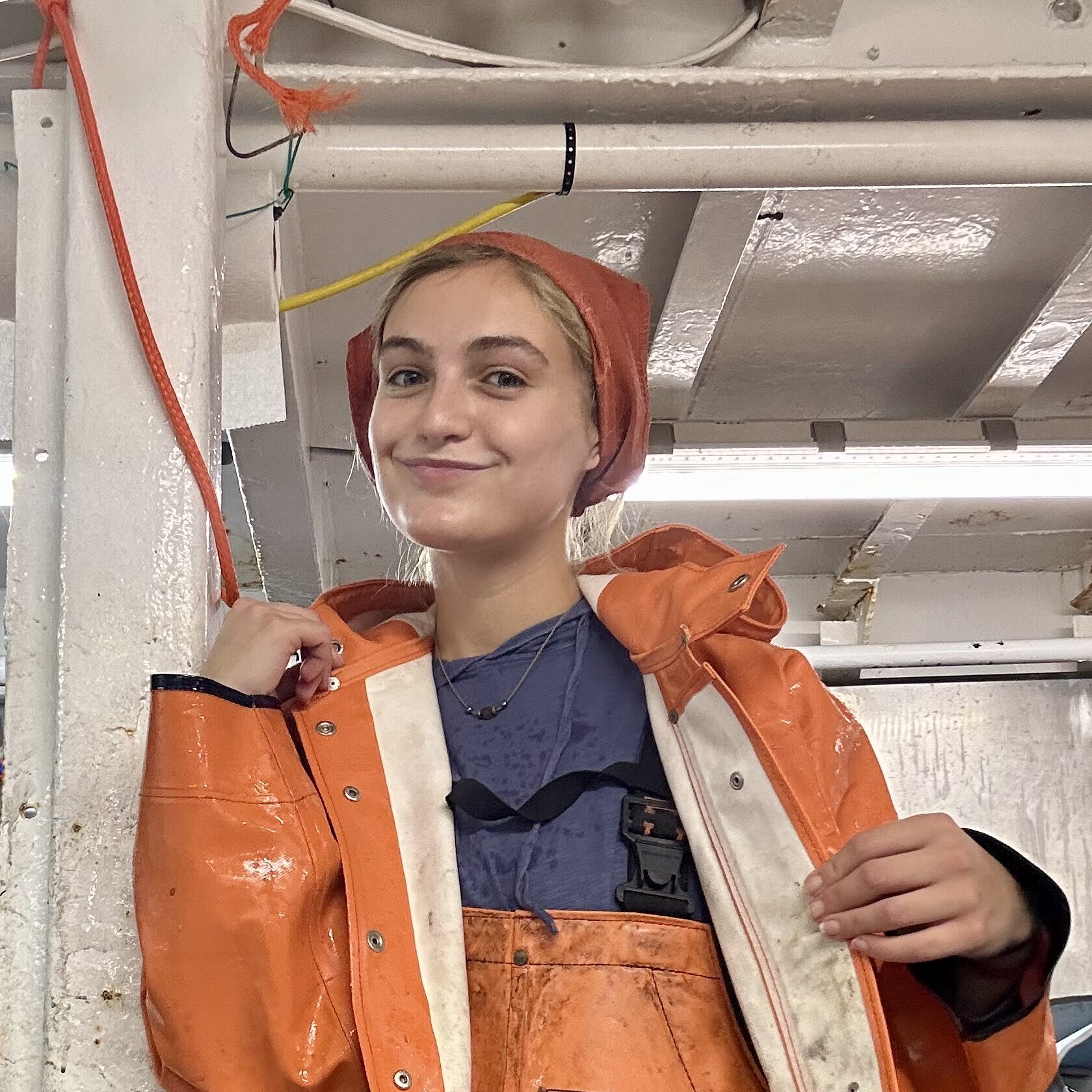
A person wearing a hat and waterproof clothes smiling while on a boat.

Since 2024, Paige has been affiliated with Rutgers Cooperative Extension of Ocean County, providing research, outreach, and educational programming efforts. She’s worked with other organizations in the county, including Barnegat Bay Partnership, as a lab and field technician. Throughout this time, she has participated in several field campaigns, including an Atlantic Surfclam population assessment survey and Bottom Trawl Surveys. Prior to her role at Rutgers, Paige spent a year as a Northeast Fisheries Observer, homeport Barnegat Light. She holds a bachelor’s degree from the University of New Hampshire and a master’s degree in Energy and Environmental Management from the University of Connecticut.
Emily DeHart

Seasonal Technician

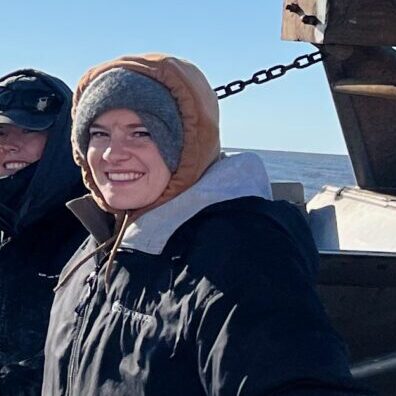
Two people with hats and big jackets on on a boat

Emily, while initially assisting at Rutger's Aquaculture Innovation Center, joined the lab in the late summer of 2023. Her primary responsibilities were assisting with the NJ Delaware Bay Oyster stock assessment lab and field processing. She also assisted with long term disease monitoring by prepping and processing samples for MSX and Dermo analysis of prevalence. She also assisted with manual scoring of video data collected from Structured Habitat Survey, subcomponent for the Orsted offshore wind project. She is now currently a environmental consultant in Southern NJ.


Chase Wunder

Graduate Fellow

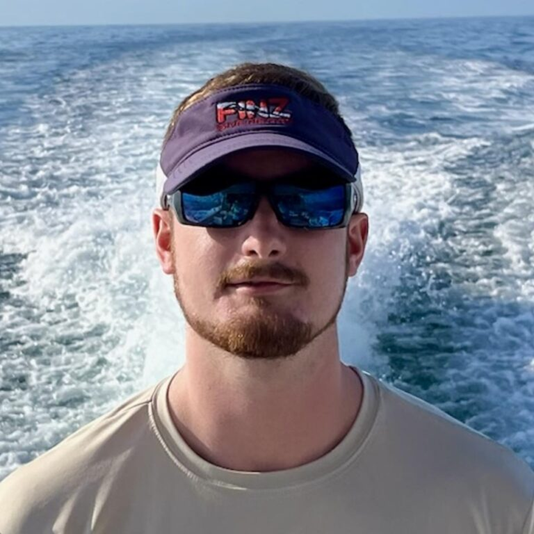
A man with glasses and a hat in the ocean on a boat

Chase Wunder graduated with a Bachelor of Science in Marine Biology from the University of Delaware in 2021, and is currently the Margaret A. Davidson Graduate Fellow at the Jacques Cousteau National Estuarine Research Reserve while pursuing a Master’s in Ecology and Evolution at Rutgers University. Chase’s primary research interests involve the processes that influence the movement ecology and migration patterns of ecologically and commercially important fishes that seasonally inhabit coastal estuaries. Through electronic tagging methods he is tagging and tracking summer flounder in New Jersey estuaries and the ocean to examine life history variation and its relation to environmental cues. This research is highly collaborative and involves local recreational and commercial fisherman, regional biologists, and partnering institutions.


Nick O’Connor

RIOS Intern

A person in a short sleeve shirt and a hat wearing a backpack holding a horseshoe crab next to a marsh.

Nick was a NSF RIOS intern with the group in Summer 2025. He is pursuing a bachelor's degree at the University of Rhode Island as a double major in Marine Biology and Aquaculture & Fisheries Science. Nick is researching the change in fish densities and assemblages at fixed gradients, utilizing camera-mounted chevron traps at artificial reef sites. Specifically, spatiotemporal changes in abundance for structure-associated species, such as black sea bass (Centropristis striata), but also other demersal finfish like sea robins (Prionotus sp.) and smooth dogfish (Mustelus canis). Nick’s broader interests lie in understanding the impacts that anthropogenic change is having on fish populations and in related fishery survey techniques.